By His Grace SVG: Christian Shirt, Jesus
A Designer’s First Look—What This Design *Feels* Like Before the Needle Moves
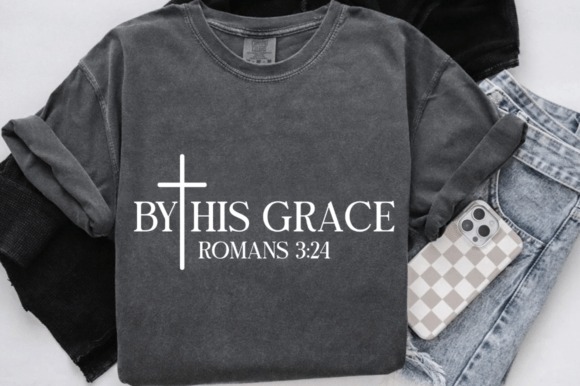
When I opened By His Grace Svg, Christian Shirt, Jesus, my first impression wasn’t technical—it was emotional. The layout is centered, reverent but approachable: a clean cross motif paired with gentle script lettering that reads “By His Grace.” No ornate flourishes, no aggressive shading—just quiet confidence in line and proportion. It’s not shouting; it’s speaking. That matters deeply when you’re stitching for real people—mothers ordering baby onesies, church volunteers making tote bags for outreach, or Etsy sellers curating a line of faith-based apparel. This design leans into sincerity over spectacle, which makes it unusually versatile across embroidery projects.
Where It Shines: Real Projects, Real Fabric, Real Customers
I tested By His Grace Svg, Christian Shirt, Jesus on a medium-weight cotton canvas tote bag—and it landed perfectly. The satin-stitched cross held crisp edges without puckering, and the script flowed smoothly across the grain. On a soft fleece-lined sweatshirt? Still legible, still dignified. I also stitched it onto a 100% cotton tea towel (with light tear-away stabilizer), and the fill stitch settled cleanly—no thread nesting, no skipped stitches. That tells me this machine embroidery design was digitized with thoughtful stitch direction and moderate density—not too sparse to look thin, not so dense it chokes lightweight fabric.
It works especially well for personalized gifts where tone matters: baptismal blankets, anniversary pillow covers, or holiday kitchen towels gifted to new parents. For small shop owners, it fits neatly into boutique branding—think neutral-toned aprons for a Christian coffee shop or embroidered patches for youth group volunteers. As a digital embroidery file, it’s compact enough to preview clearly in printable mockups yet substantial enough to feel premium in finished product photos.
Where to Pause—Not Every Surface Is Equal
This isn’t a one-size-fits-all embroidery file. On stretchy fabrics like jersey t-shirts or baby bodysuits, I recommend testing with cutaway stabilizer—not just tear-away—to prevent distortion around the curve of the cross arms. Tiny lettering in the script portion won’t read cleanly under 3 inches tall, so avoid hooping it smaller than 3.5" wide on caps or curved surfaces unless you’ve confirmed the digitizing holds detail at that scale. And on dark fabric? Don’t assume black thread will pop—run a quick black-and-white mockup first. I found navy thread gave richer contrast against charcoal sweatshirts than pure black did.
Also worth noting: while the design avoids excessive layering, the cross base does use a subtle fill stitch border. That means extra attention is needed on textured fabrics like terry cloth or bouclé—test before committing to a full run of embroidered kitchen towels. And if you’re planning layered garments (like an embroidered patch sewn onto a denim jacket), make sure the original file includes clean edge finishes—no floating threads or clipped corners that could fray after washing.
How It Shapes Perception—Beyond Stitch Count
Customers don’t buy stitch density—they buy meaning, clarity, and care. By His Grace Svg, Christian Shirt, Jesus delivers that quietly. Its balanced proportions communicate reverence without rigidity; its clean lines say “handmade with intention,” not “mass-produced clip art.” That builds trust—especially for Etsy sellers or craft fair vendors where buyers scan quickly for authenticity. When used on nursery decor or baby embroidery, it feels tender rather than preachy. On a men’s unstructured cap? Still grounded, still respectful. That tonal consistency elevates brand consistency across your craft business—whether you’re selling one custom apparel piece or fifty small shop products.
Practical Notes Every Embroidery Designer Should Run Through
- Always test on scrap fabric matching your final project’s weight and stretch—even if it’s “just cotton.”
- Check thread color contrast on both light and dark backgrounds before stitching the final piece.
- Review stitch density: if your machine hesitates or fabric puckers mid-design, reduce tension slightly or add a second layer of stabilizer.
- Confirm hoop size compatibility—this design scales well, but pushing it below 3” risks losing definition in the script.
- Inspect small details at 200% zoom in your embroidery software: are corner joins smooth? Are satin stitch transitions even?
- Run a black-and-white mockup to assess value contrast—critical for social media thumbnails and Etsy listing visuals.
- Verify licensing terms before selling finished items or bundling this as part of a commercial embroidery collection.
- Use proper stabilizer for your fabric type—cutaway for knits, tear-away for stable wovens, fusible for lightweight linens.
Final Thought: A Design That Serves the Project, Not the Other Way Around
By His Grace Svg, Christian Shirt, Jesus doesn’t demand attention—it earns it. It’s not flashy, but it’s memorable. It doesn’t try to be everything, but it fits naturally into many things: a quiet moment on a baby onesie, a bold statement on a tote bag, a warm note on a holiday tea towel. As a T-Shirt Designs asset, it bridges personal expression and commercial practicality—clean enough for digital embroidery file libraries, meaningful enough to anchor a handmade product line. If you’re choosing embroidery design assets for real-world use—not just pixel-perfect previews—this one earns its place in your folder. Just remember: respect the fabric, honor the detail, and always stitch with intention.